seasonal
Winterizing Your Home
The official start to the fall season was September 23. While you may be enjoying all the great things associated with this time of year — pumpkin-flavored everything, apple picking with the family, wearing your favorite cozy sweaters and scarves, and decorating your home for Halloween — you shouldn’t forget that winter is quickly approaching. test
The official start to the fall season was September 23. While you may be enjoying all the great things associated with this time of year — pumpkin-flavored everything, apple picking with the family, wearing your favorite cozy sweaters and scarves, and decorating your home for Halloween — you shouldn’t forget that winter is quickly approaching.
If you live in an area that sees brutally cold temperatures in the winter, along with your share of snow and ice, now is the time to do what you can to ensure your home is ready for the conditions ahead.
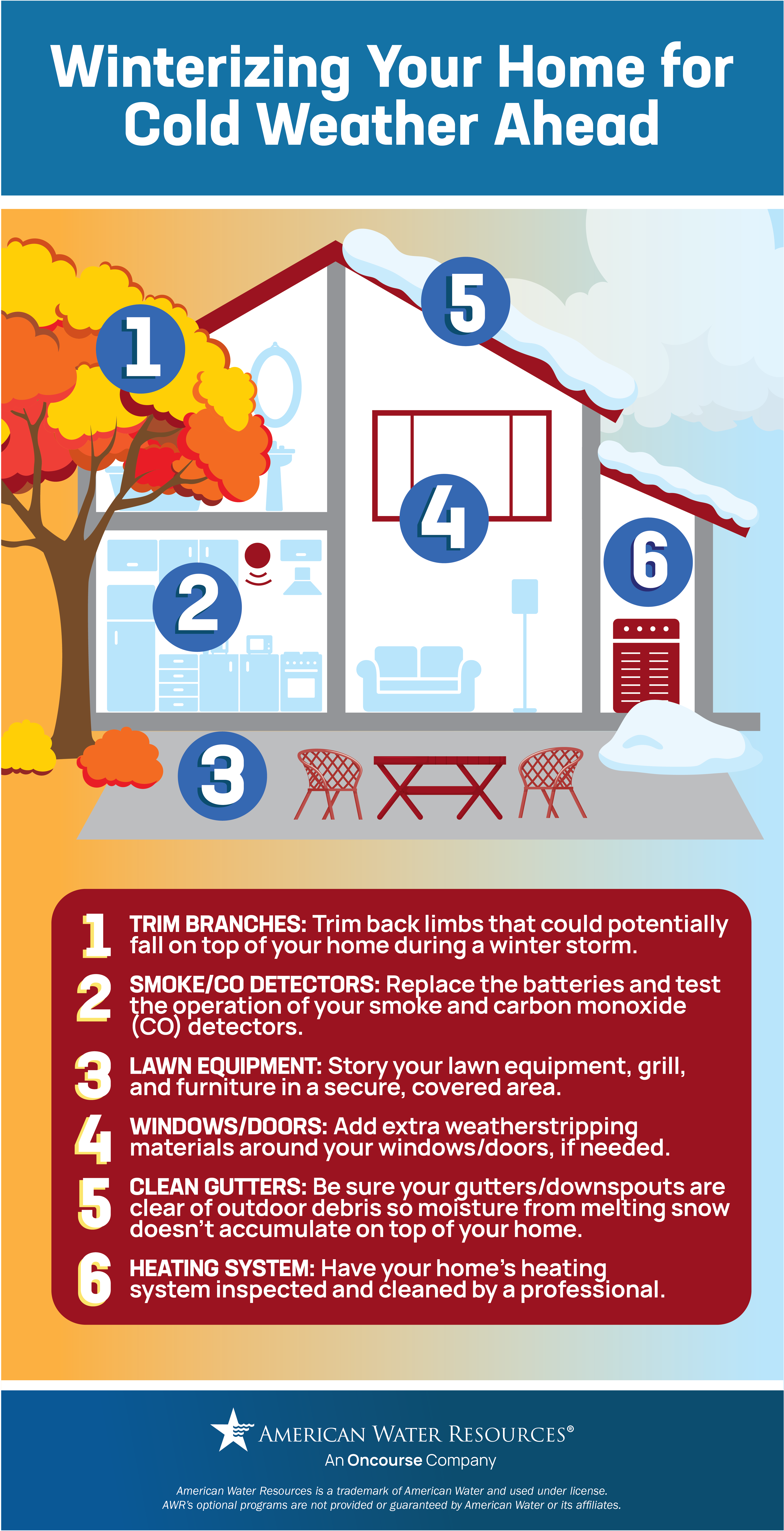
We’ve put together this helpful infographic with often-overlooked areas of the home that you should have ready before winter arrives. Check it out!
Schedule heating maintenance
Your furnace kept your home nice and warm last fall and winter, so you don’t need to schedule a tune-up appointment this year, right? Wrong. HVAC professionals recommend having your home’s heating system cleaned and inspected by a skilled technician every year. During this appointment, all components inside your unit are cleaned and inspected to ensure everything is in working order. If any potential problems are detected, they can be taken care of before the issue results in a breakdown of your system at a time when you’re relying on it.
In addition to having a professional inspect and clean your furnace, there’s something you can do to help keep this system running efficiently — replace your air filter monthly during the peak of the heating season. Doing so ensures that conditioned air from your furnace can pass through and into the ductwork in your home. A dirty air filter prevents efficient air flow and may result in unevenly heated areas of your home, as well as premature wear and tear on your furnace.
Check your windows and doors
As time passes, the seals around your windows and doors — seals that help to keep summer or winter air outside — can weaken. When this happens, conditioned air from inside your home escapes, and outdoor air can get inside. This can cause your home to feel drafty and cold during fall and winter.
To determine whether extra weatherstripping materials need to be added to your windows and doors, run your hand along the window and door frames’ perimeters. If you feel any areas that are colder, these are likely weakened areas that need sealing. Weatherstripping can be purchased at your local hardware or home improvement store.
Store your lawn equipment for the season
Now that colder weather is here, you likely won’t need to mow or tend to your lawn for a while. This means that you can put away your lawnmower, weed trimmer, rake (after the leaves have stopped falling), and garden hose until next spring. Put your lawn furniture and pool accessories into storage, as well, ideally in an area that is covered and out of the elements. If you don’t have a shed or garage where you can store things, your next best bet would be to put the items in your basement. If you don’t have basement space available, cover everything securely with a tarp so that moisture can’t get inside and cause damage or develop rust.
Clean your gutters and trim branches
It’s likely one of your least favorite chores — dragging a ladder out to spend hours removing leaves, pinecones, acorns, twigs, and other outdoor debris from your home’s gutters. But it still has to be done. Many homeowners associate cleaning gutters with the warmer months of the year when storms and heavy rainfall are common. After all, you want to be sure moisture can be lead off the roof and out through your downspouts, right?
Having clear gutters is also important during the winter. When you have melting snow and ice on your roof, all that moisture needs to go somewhere. If you have clogged, dirty gutters, the melting precipitation will not be able to drain. Ultimately, this could lead to moisture damage to your roof and shingles, as well as ice dams and interior damage. Not just that, but if it pools up and spills down your home’s exterior, the moisture could also cause problems for your siding.
While you’ve got the ladder out, trim back any tree branches hanging over your home. Gusty winds are common during the winter months, and you wouldn’t want these winds to knock a branch loose if there’s a chance it could fall on your home. If you don’t feel comfortable trimming tree branches yourself, contact a landscaping company or arborist for assistance.
Check your smoke alarm and carbon monoxide (CO) detectors
Now is the perfect time to test your home’s smoke and CO alarms to be sure they’re working as expected. If these alarms run on batteries, replace them with fresh ones. Test the notification button on the alarms to be sure they’re making a sound.
This is also a great time to practice your emergency plans with your family — so that everyone knows what to do in case of a fire, tornado, earthquake, or other disaster. Be sure everyone knows what to do and who to contact in case of an emergency. Also check your first aid kit to make sure it’s stocked full of fresh supplies should you need them. Dispose of any expired medications at your local fire or police department — do NOT flush them down your toilet or put them down your sink as this can be hazardous for the local environment.
Want more helpful homeowner tips?
Don’t forget to check our blog often as we are regularly posting new tips, tricks, and advice for homeowners like you! If you want to know more about our protection programs available in your area, simply enter your ZIP code on our home page to get started.